05/01/2026
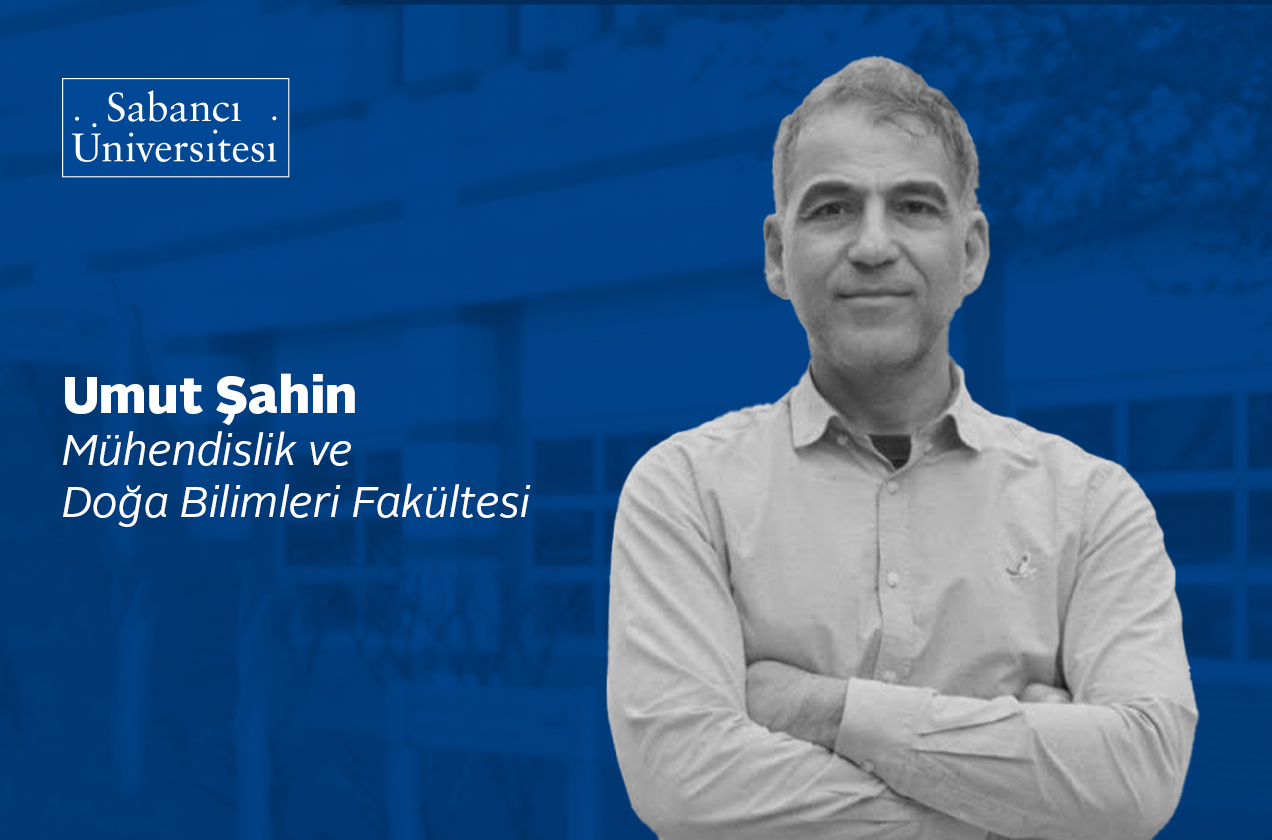
Umut Şahin
Sabancı University Faculty of Engineering and Natural Sciences
Neurodegenerative diseases are a heterogeneous group of diseases characterized by the progressive loss of neurons in the central nervous system and, in some cases, the peripheral nervous system. Due to the aging global population and limited treatment options, the burden of these diseases is increasing and it is becoming one of the most critical public health problems worldwide. Alzheimer's disease, Parkinson's disease, amyotrophic lateral sclerosis (ALS), and Huntington's disease (HD) are common examples in this group. ALS is the third most common neurodegenerative disease in humans after Alzheimer's and Parkinson's, as well as the most common motor neuron disease.
Although they present genetic and clinical diversity, neurodegenerative diseases are known to share some common characteristics at the cellular and molecular level. These common mechanisms include pathological protein aggregation, impaired proteostasis, cytoskeletal abnormalities, disruptions in energy metabolism, defects in DNA and RNA-related processes, and chronic inflammation. All these processes ultimately lead to neuronal cell death and disruption of synaptic circuits.
Protein aggregation is a process with the potential to be stopped
Among these mechanisms, protein aggregation, in particular, is a process observed in almost all neurodegenerative diseases, including ALS, and in recent years, thanks to its pharmacological targetability, it has the potential to be stopped. Proteins are building block molecules that play a fundamental role in regulating all cellular functions, including nerve cells. However, various factors, such as mutations due to DNA damage, can disrupt the structure of proteins; this disruption can cause proteins to lose their solubility and accumulate within the cell, forming aggregates. These structures often lead to serious cellular toxicity, particularly causing the loss of neurons.
Our studies aim to investigate the role of protein aggregation in ALS at the cellular and molecular level, and to explore whether this process can be pharmacologically targeted and whether it is a preventable mechanism.
ALS is a disease with an extremely complex genetic background; to date, more than 30 genes have been shown to play a role in its pathogenesis. The NEK1 gene was first associated with ALS in 2015–2016, and since then, it has been shown to be mutated in a significant proportion of patients. NEK1 is a particularly interesting gene because the NEK1 protein it produces regulates the "primary cilium," an antenna-like structure found in many cells, including neurons, that enables cells to communicate with other cells.
In collaboration with the College de France in Paris, we have developed a novel experimental mouse model of ALS fueled by NEK1 mutations, the first of its kind in the world. The mutant NEK1 protein in these mice carries the same mutations as those found in ALS patients. Our studies have shown that the mutant NEK1 protein detaches from the primary cilium and forms protein aggregates within the cell, subsequently leading to the loss of motor neurons in the brain and spinal cord. In short, we have documented that mutations in the NEK1 gene are directly associated with protein aggregation. This finding is of great importance because by identifying the mechanism that causes the disease at the molecular level, we can develop experimental treatment strategies aimed at reversing the process or at least halting its progression by targeting this mechanism.
These results are currently only pre-clinical. Our aim is to advance these studies to the clinical level to investigate whether similar positive clinical responses can be observed in ALS patients carrying NEK1 mutations.
The Importance of Targeted Therapies for ALS
Currently, there is no "definitive cure" for ALS in Türkiye or elsewhere. Treatments applied after diagnosis are largely generic; their effectiveness is limited, and they are aimed at alleviating symptoms and maintaining quality of life rather than stopping disease progression. ALS, like cancer, is a complex and heterogeneous disease; the fact that the cellular and molecular mechanisms causing the disease have not been fully elucidated has made the development of effective treatments difficult. Instead of the very limited and generic treatments used to date, innovative, specific, and targeted therapeutic strategies that target the toxic proteins, disrupted cellular pathways, or organelles causing the disease, as our team has shown, have the potential to be much more clinically advantageous.
To develop these next-generation targeted therapies, it is necessary to deeply understand the mechanisms causing the disease, identify the most suitable proteins or organelles that can be targeted with pharmacological methods, and support this with pioneering research at both the basic science and translational levels. Our team's work is progressing precisely along this axis.
Recently approved by the FDA and classified as a gene therapy, Tofersen is actually a targeted therapy and provides a positive clinical response to patients with a limited number of SOD1 mutations. This drug was approved in the US and in Europe in 2024–2025. If Tofersen receives official approval in Türkiye and becomes accessible through social security coverage, it will create a significant milestone in the treatment of ALS patients with SOD1 mutations.
There is a clear difference between "promising" treatments and "actually effective, reliable, and widely available" treatments from a scientific and clinical perspective. Many groups, including our research group, are continuing their work to better understand the mechanisms of the disease and develop more effective treatments. Hopefully, our targeted therapy strategy, which we mentioned above and which has yielded positive results in the pre-clinical stage specifically for the NEK1 gene, will one day reach patients at the clinical level. However, a long and arduous research process requiring dedication and support lies ahead. Our team and our business partners, both domestically and internationally, are working diligently towards this goal.